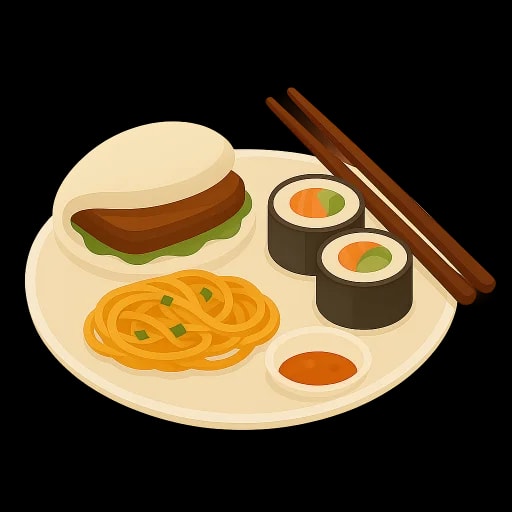
At Miss Bao, the composting bin and the tray of microgreens are not a side story to the cooking — they are the reason the menu looks the way it does. This Asian-fusion restaurant and cocktail bar on Princess Street built itself around a zero-waste operating model, and the seven Rs it works from — Rethink, Refuse, Reduce, Repurpose, Reuse, Recycle, and Rot — shape what reaches the table as much as any culinary reference does. What could read as restraint instead reads as range: steamed bao, shareable small plates, seasonal produce turned into full dinners, and a cocktail list built on the same sourcing discipline. The name points to bao, the steamed buns the kitchen treats as the centre of gravity for everything around them.
The bao section is the clearest calling card. The Taiwanese Braised Pork Belly Bao is the namesake order, two steamed buns built around a rich, savoury braise, and the Bao Sampler lets a table compare pork, chicken, and tofu in a single pass. Around it the small plates hold their own: Crispy Shiitake Wontons fold tofu, shiitake, and seasonal vegetables into a plant-based bite with sweet-and-sour contrast; Beet Tartare pairs soy-citrus pickled beets with whipped lemon tofu; Karaage comes as shoyu-marinated fried chicken under teriyaki, lemon aioli, nori, and bonito. The larger plates carry the meal further — Tan Tan Noodle with spicy minced pork and chili oil, Spicy Korean BBQ Pork with house-made kimchi, and a Thai Red Curry built on house-made paste, coconut milk, legumes, and rice. Dessert lands on a Blueberry Earl Grey Tiramisu.
What ties the menu together is that the sustainability is legible in the food rather than posted on a plaque. Seasonal vegetables move through the wontons and the curry because the kitchen buys local and seasonal; peel and trim are repurposed rather than binned; the microgreens are grown on site. At least half the menu reads vegan, vegetarian, or gluten-free, and the plant-forward dishes are built as their own thing — Mushroom Lentil Pate with maple whole-grain mustard, Hot Lemon Pepper Tofu Bao, Sweet Chili Shoyu Mushroom Bao — rather than substitutions bolted onto a meat menu. The result is a kitchen where the ethics and the cooking are hard to pull apart.
Miss Bao opened as Kingston's first zero-waste restaurant, and the story behind it belongs to Bellen Tong and Zach Fang, Queen's alumni and the couple who built the place. According to local reporting at the time, they tied the concept to downtown Kingston, local suppliers, and a waste-conscious kitchen model from the outset, rather than grafting sustainability onto a generic fusion concept after the fact. That logic runs into the bar as much as the plates: the cocktail list leans on Asian spirits, tea, spice, smoke, and citrus, from the table-side smoked Rum + Smoke — El Dorado rum, sherry, Campari, and house-made smoked-rosemary syrup — to the matcha, melon, and yuzu of the Mount Fuji and the masala-and-chai Miss Bao Dirty Chaitini. The same sourcing thinking that shapes the food runs through the glasses.
Miss Bao runs as a dinner-focused room four nights a week, Thursday through Sunday, so it rewards planning a downtown evening around it more than a walk-in habit; reservations go through the restaurant's own page. Williamsville and the Princess Street stretch have filled in around it, and the format stays easy to read: bao and small plates first, cocktails meant to sit alongside the food rather than ahead of it, and enough plant-forward range that a table of mixed appetites rarely has to negotiate. The move is to build a spread — a sampler of bao, a plate of shiitake wontons, a curry between everyone, a citrus-and-chili Tom Yam Siam going around — and let the meal wander the menu the way the kitchen clearly means it to.