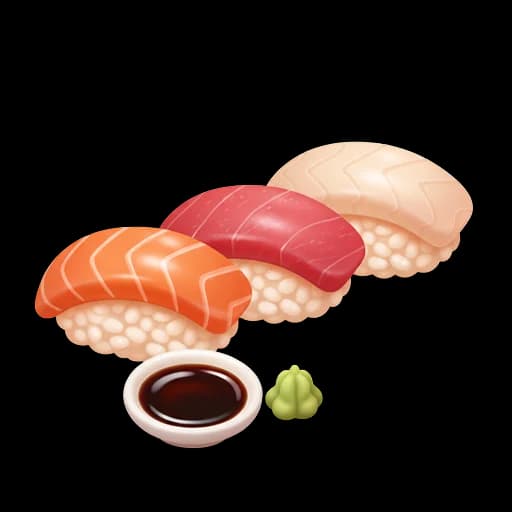
A kitchen torch does the defining work at Minami Toronto. The restaurant's Aburi oshi sushi — salmon, Hokkaido scallop, ebi, yellowtail, and spicy tuna, each pressed into a block of vinegared rice — is flame-seared to order, the surface caramelized just before a finish of Miku sauce, truffle, or yuzu miso pepper. That technique is what sets the King West dining room apart from the city's many capable sushi counters. The Aburi Salmon Oshi Sushi, topped with jalapeno and Miku sauce, is the single order that explains the place fastest.
From there the menu widens without losing its frame. The Minami Roll is the kitchen's richest sushi statement, folding negitoro and uni together with Japanese wagyu, truffle powder, lemon aioli, pickled daikon, and wasabi pickles. Cooked plates carry equal ambition: Saikyo Miso Sablefish arrives with black garlic jus, yuzu miso, mushroom rice, and kizami wasabi, while A5 Miyazaki wagyu shows up two ways — sliced raw as carpaccio with tomato Miku sauce and parmesan tuile, or roasted as a striploin with peppercorn jus. Even dessert refuses to coast, with a hojicha tiramisu and a layered carrot cake built on cream cheese espuma and Saikyo miso caramel.
The breadth beyond sushi is real. Hot tapas run from soft-shell crab karaage with lemon aioli to tempura calamari and a five-piece truffle dashi pork gyoza, and the beef sukiyaki pot roast braises shank with sweet soy and an onsen tamago. There is a plant-forward lane too — grilled tofu with mushroom puree, nori glaze, and tempeh that reads as a dish rather than a concession. The kitchen scales up or down at will: a Miyazaki wagyu striploin and a Japanese Wagyu X steak sit at the top of the dinner menu, while seafood poke nachos and chicken nanban karaage anchor the lighter end of the menu.
None of this reads as accident. The dining room is built to match the kitchen's ambition — a forty-six-hundred-square-foot interior designed by DesignAgency, anchored by a red-orange fabric installation overhead and a mural by Japanese artist Hideki Kimura, and recognized in its own right for the design. That setting changes how the food lands: pressed sushi and flame-seared wagyu register as part of a composed evening rather than a quick meal. The menu's range, from a structured tasting menu through shareable tapas and sake and Japanese whisky flights, makes the same argument the design does — that this is more than a polished sushi counter.
The flame-searing is not a local invention. Minami belongs to the Aburi Restaurants group, which built its name in Vancouver with Miku and carried the technique east; the group's founder, Seigo Nakamura, is credited with popularizing the flame-seared pressed-sushi style in North America. In Toronto the kitchen is led by head chef Nao Akutagawa, with executive pastry chef Aiko Uchigoshi behind the unusually serious dessert list. The lineage explains the Miku sauce that recurs across the menu — a through-line from the Vancouver original to the King West tables.
What keeps Minami from being only a special-occasion booking is how many ways it can be used. The tasting menu — tuna tataki, salmon crudo, a run of chef-selected sushi, an entree of sablefish with half a lobster tail or wagyu, and a pastry-team finish — is the full version of the evening. But there is also an afternoon happy hour of cocktails, draft beer, and small bites; Gozen lunch sets at midday; and Friday and Saturday late-night service that starts at half past ten with poke nachos, calamari, and chicken nanban. A few minutes from Roy Thomson Hall and the theatres along King West, it is as workable before a show as it is for the long, planned dinner the room was clearly designed to hold.